Thank you!
Your request has been sent.
We'll review your request and get back to you within 1–2 business days.
Thanks for the feedback!
We appreciate you helping us improve.




Card & Board Game UI/UX and Art Studio
Boards that play.
Cards that collect
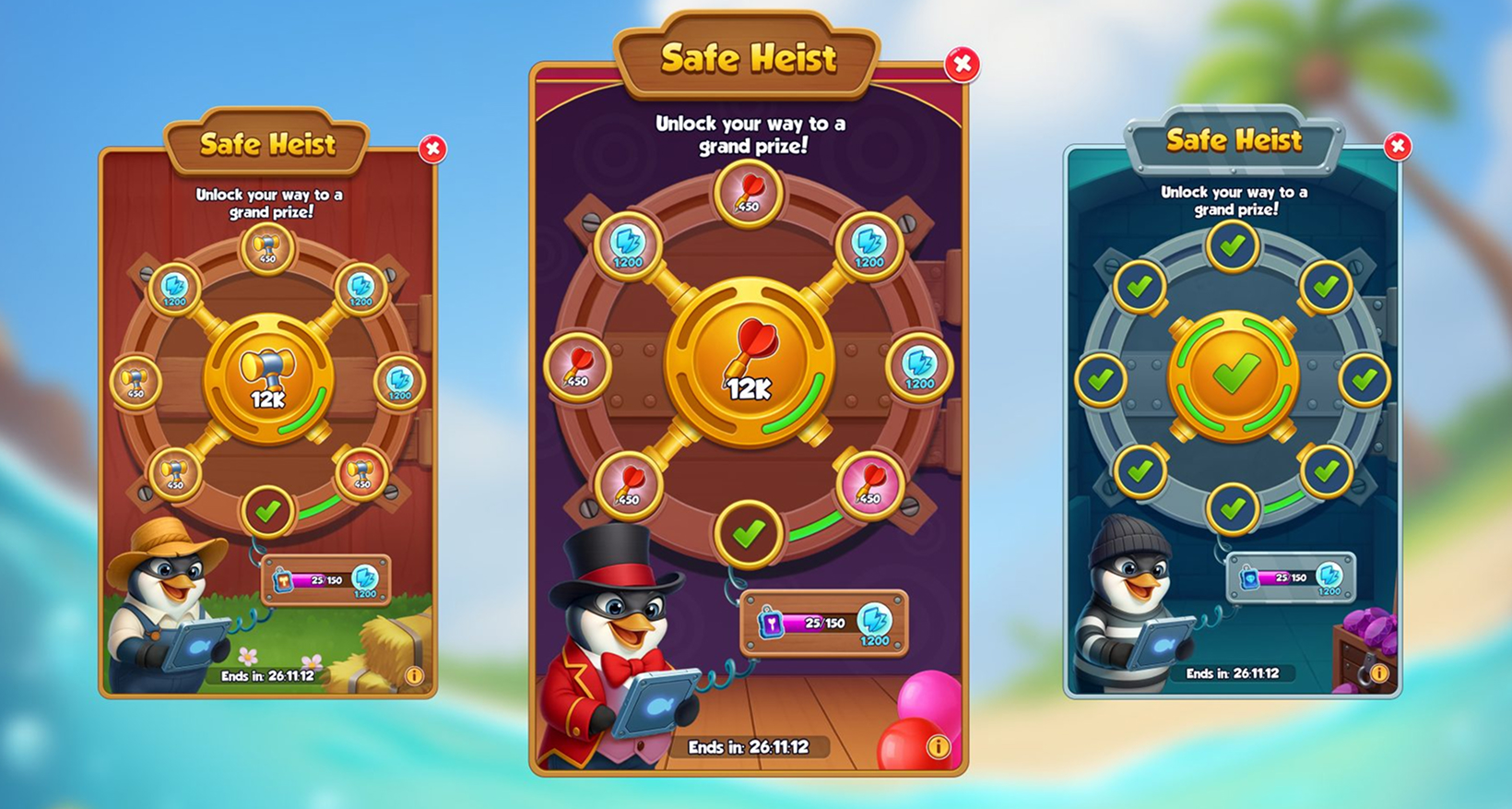
UX/UI and stylized art for digital card and board games – screen layouts, shops, event interfaces and supporting assets, backed by our work on Mafia Go and Wave Master.
Request a Quote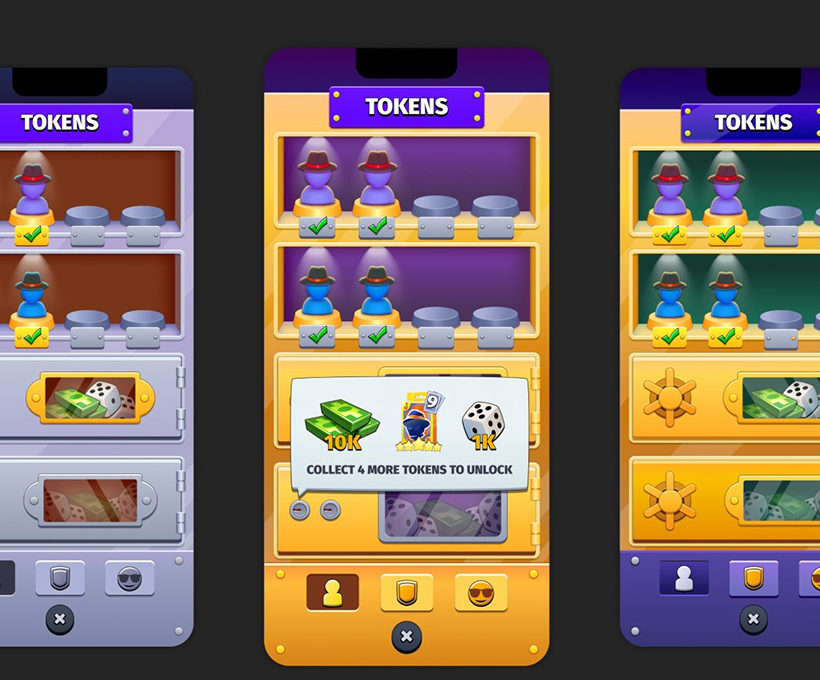


01 · The Genre
Card & Board Games
Digital card and board games turn tabletop rules into screens: players roll dice, move tokens, draw cards or build decks, and compete for a score, a territory or a collection. Many mobile titles blend the two, adding upgrades, events, rewards and recurring play with friends.
In many digital card and board games, the interface is central to the player experience. Boards, cards, tokens and controls need clear visual hierarchy, readable information and immediate feedback. Around the core loop sits a meta layer – shops, offers, collections, event calendars, reward pop-ups – and much of that content reaches the player through UI. Games with ongoing content updates may need new event screens, themed assets, rewards or card sets, depending on their content model, so the art works best as a system in which new items match the old ones.
Art for card & board: UX/UI · stylized UI portfolio · concept art · characters
SUBGENRE 01
Digital Board Games
Dice, tokens, spaces and ownership, moved onto a phone. The board is the main screen, and its clarity decides how quickly a new player understands the turn.
Art priority: board layout and readability, tokens and skins, turn feedback, event overlays
Example in our work: Mafia Go – a mafia twist on classic board-game mechanics
SUBGENRE 02
Collectible Card Games
Players build collections or decks and use cards in competitive, cooperative or solo modes. Each card combines artwork with gameplay information, so layout clarity and visual hierarchy are essential.
Art priority: card frames, illustration, visual indicators for rarity tiers, readable card information, collection interfaces
Example in our work: No published collectible card game case yet
SUBGENRE 03
Casual Card & Party Games
These games often emphasize approachable rules, social interaction and clear feedback. Their visual design should help players understand actions and outcomes without obscuring the underlying mechanics.
Art priority: table and card visuals, avatars, emotes, quick-read UI
Example in our work: No published card or party game case yet
SUBGENRE 04
Hybrid Board-and-Collection Games
Board movement combined with collecting, raids, heists or battles, often wrapped in events and offers that bring players back.
Art priority: meta screens, event and offer UI, collection art, reward moments
Example in our work: Mafia Go · Wave Master
Looking for casual mobile art beyond cards and boards?
See our Casual & Puzzle game art.
02 · The Layers
Three Layers of a Card & Board Game
Each layer asks a different visual question, and a project may need help with one, two or all three.
Board layer
What the player does
Reads the map, moves, rolls, claims
What the art has to do
Make spaces, ownership and the current turn readable at a glance; give tokens and board skins a clear silhouette
Proven in our work
Board-game UX/UI and skin selection screens on Mafia Go
Card layer
What the player does
Reads, compares and plays cards
What the art has to do
Keep names, costs and effects legible; make frames, rarity cues and illustration work together
Proven in our work
No published card case yet
Meta layer
What the player does
Shops, collects, joins events, claims rewards
What the art has to do
Guide attention to offers and prizes without hiding the core game; keep collection and inventory screens easy to scan
Proven in our work
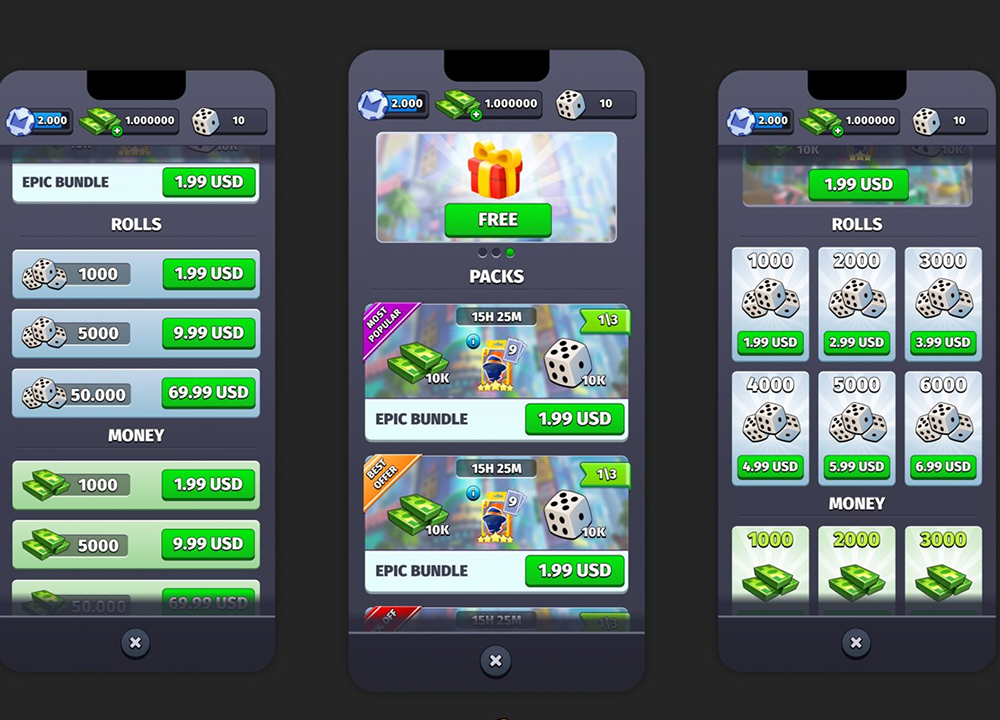
Shop, offer, event and reward screens on Mafia Go and Wave Master
Turn feedback ties the layers together: what just happened, whose turn it is and what comes next should be clear before the player reads any text.
03 · Platforms
Where Card & Board Games Play
Digital card and board games can ship on phones, tablets and PC. Screen size, input method and store requirements shape every layout.


Mobile
Touch targets, one-handed play and small screens decide how much a board or a card can show. Interfaces are planned against the target device range, with layouts checked at the smallest supported screen.
Mobile game with our UX/UI
Wave Master

Tablet
More room for the board, hands of cards and side panels. Layouts are checked at tablet aspect ratios so that menus do not simply stretch.

PC & Browser
Mouse input and larger displays suit deck-building and collection screens. Scaling rules and hover states are specified in the UI handoff.
04 · Engine
UI Assets for Your Game Engine
shown in our case
to handoff
We prepare UI deliverables according to the agreed engine and production requirements, including exported graphics, screen states, source files and asset organization where applicable. In-engine implementation and game logic remain with your development team unless separately included in the scope.
05 · By Studio
Who We Build Card & Board Art For
The right scope depends on what your team already has. Some studios need the whole interface designed; others need extra capacity for events and new content.
| Studio | What you need | Typical scope | How we plug in |
|---|---|---|---|
| Independent teams with a prototype | An interface that explains the rules at a glance | Screen layouts, navigation, core UI kit | A defined UX/UI package with handoff |
| Teams with ongoing content updates | New events, offers or card and token sets, depending on the content model | Event screens, offer pop-ups, shop updates | A long-term partner working to your art bible |
| Teams in pre-production | A look that tests well and sells the game | Key screens, style frames, concept direction | A fixed-scope pilot, then production |
06 · How We Work
Direct, Subcontract or Part of Your Team
Direct Engagement
You share the game concept, rules and target players, and we plan and design the interface with an art director and a project manager on our side reporting to you.
Subcontract (White-Label)
For co-development partners and lead studios: we produce under your brand and your NDA, and the delivery goes out in your name.
Discuss a white-label projectTeam Extension
Our designers and artists work in your pipeline under your art direction – you run the process, we add capacity.
UX First, Then Visuals
Board and card games depend on clear flows. A project can follow four steps – briefing and UX planning, screen layouts, UI design, and review with handoff to your developers – the same sequence published in our Mafia Go case. The exact plan is agreed at the brief.
07 · Cases
Card & Board Experience
Our published work in this genre is UX/UI, so this is where we are strongest today. We have no published collectible card game case yet.
Direct board-game experience
Mafia Go
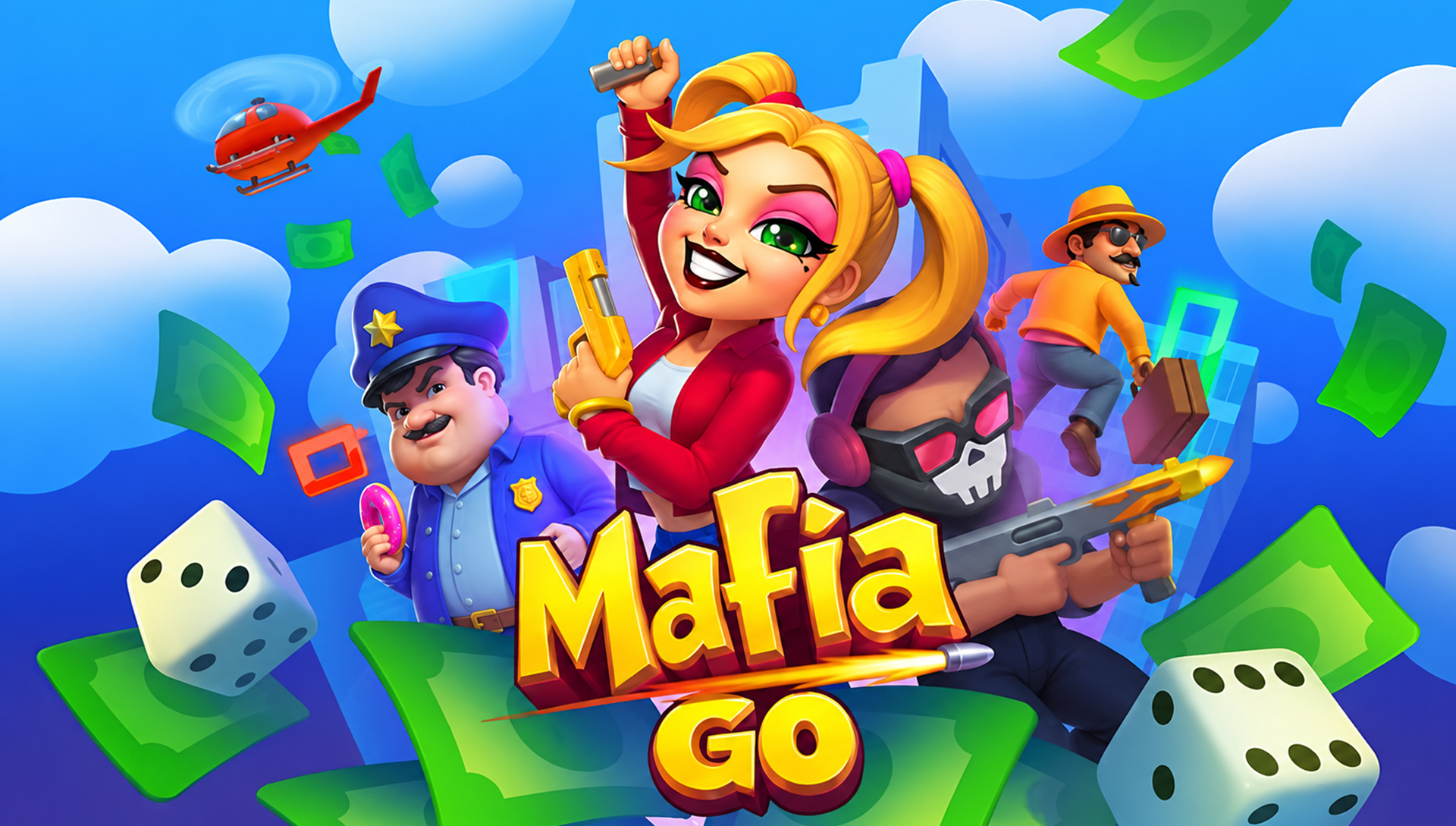
Board game by Whaleapp LTD with a playful mafia twist: players roll dice, expand territories, upgrade businesses and collect card sets. We designed its UX/UI – screen layouts, navigation and visual design – including shop, offer, event and skin screens.
View the Mafia Go caseRelated casual UI & art experience

Wave Master
Underwater strategy game by Banner Games with collection, battles and heists. We worked on UX/UI as a whole, including event screens, shop and offers, and delivered 2D props, 2D environments and concept art.
View the Wave Master case
Bubble Quest of Vikings
Bubble-shooting puzzle by Whaleapp LTD. We produced concept art, stylized characters, 2D and 3D animation, props, environments and UX/UI, showing how one art direction can run from characters to interface.
View the Bubble Quest case08 · The Evidence
What Is Confirmed and What We Agree With You
| Art category | Delivered on our projects | Agreed with you at the brief |
|---|---|---|
| UX/UI: layouts, navigation, UI design | Mafia Go, Wave Master | Screen list, resolutions, input, handoff format |
| Shop, offer and event screens | Mafia Go, Wave Master | Event cadence, currencies, reward types |
| Skin selection screens | Mafia Go (token and board skins screen) | Which skins are designed by us |
| Stylized 2D props and environments | Wave Master | Board theme, asset list |
| Characters and animation | Bubble Quest of Vikings | Roster, animation needs |
| Card illustration and card frame systems | Not demonstrated by these projects | Scope agreed separately |
| Rules, balance, monetization design | Not an art task | Owned by your design team |
| Board or table asset production beyond UI | Not demonstrated by these projects | Scope agreed separately |
FAQ's: Card & Board Game Art
What counts as a card or board game in digital form?

Do you create card illustrations and card frames?
Do you design shop, offer and event screens?
Do you design game rules or balance?
Can you work in our engine, and which platforms do you support?
How do I get an estimate for a card or board game?
Building a card
or board game?
Tell us about your game mechanics, key screens, card or board assets, target platforms and production scope. We review the brief and respond with questions or a preliminary estimate in 1–2 business days.
- Transparent pricing
- Honest feedback
- No hidden costs - ever