Thank you!
Your request has been sent.
We'll review your request and get back to you within 1–2 business days.
Thanks for the feedback!
We appreciate you helping us improve.


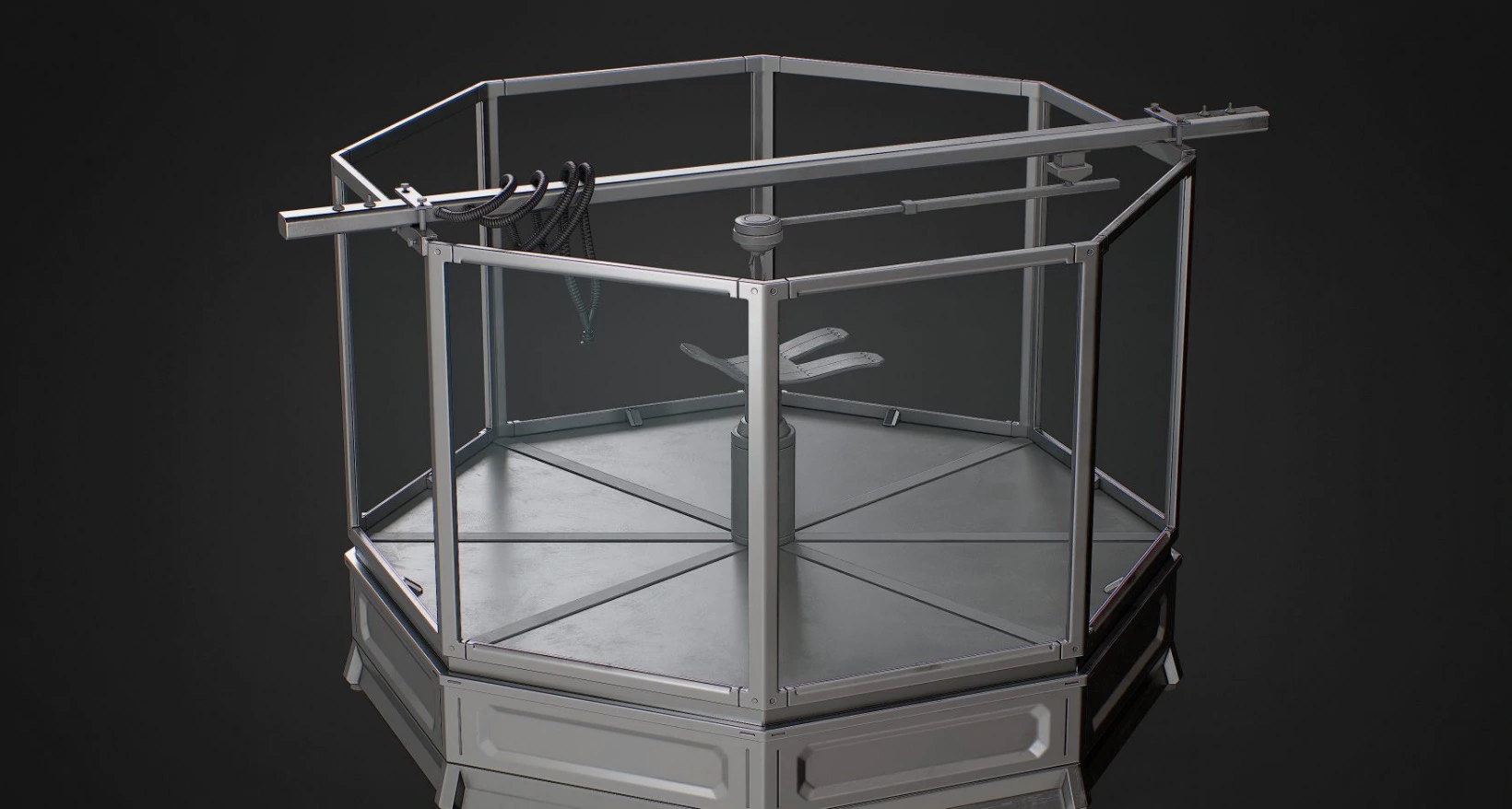


Game Art for Unreal Engine 5
Art planned for the
engine it ships in
Props, environments, weapons and vehicles built to your Unreal Engine 5 specifications: geometry, materials, naming and the rendering features your project uses.
Related Unreal Engine work: Starship Troopers: Extermination (UE5) · Miasma Chronicles · Mutant Year Zero (UE4)
Request a Quote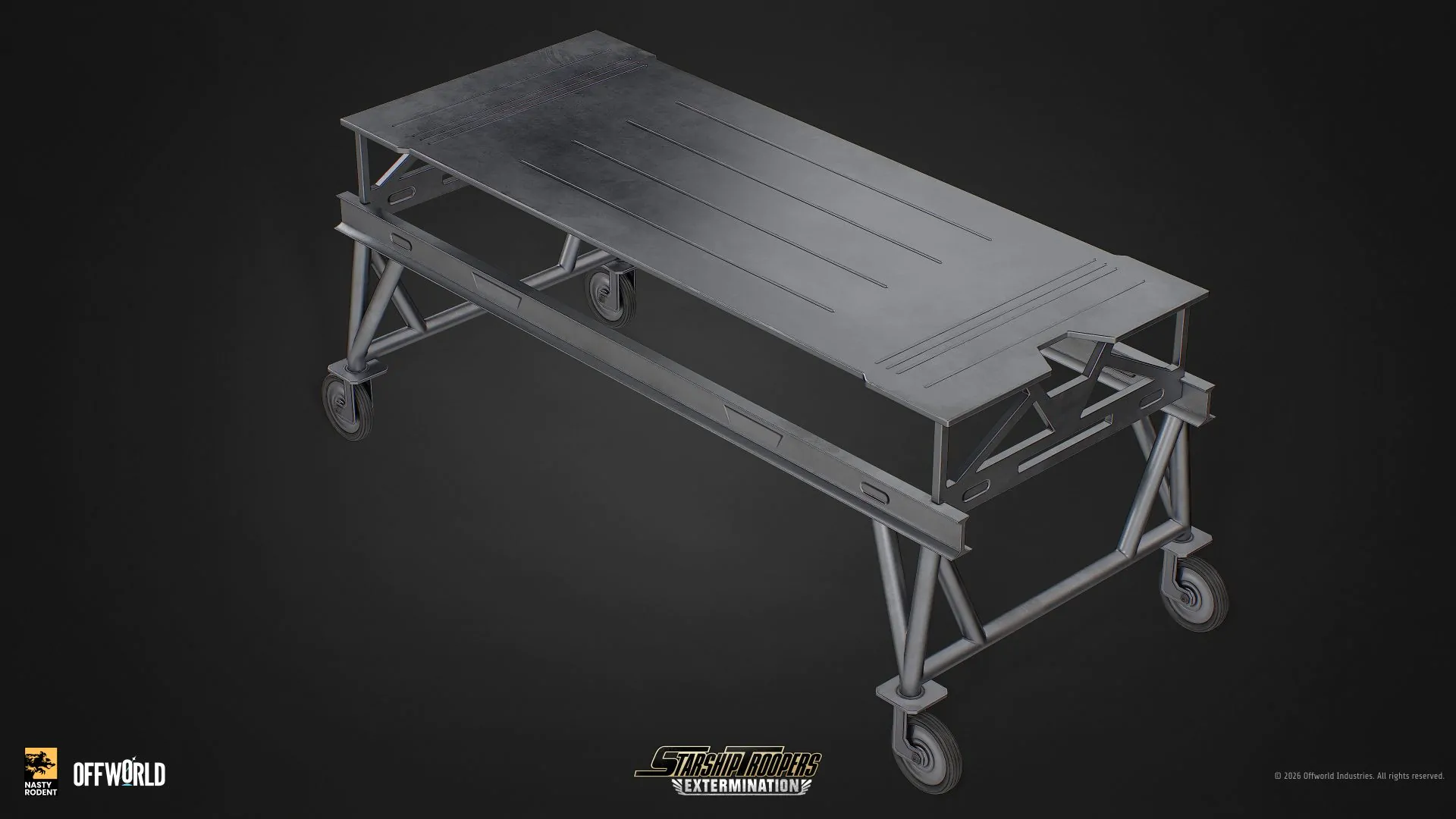


01 · The Engine
What Unreal Engine 5 Changes for Game Art
Unreal Engine 5 is Epic Games' real-time engine, and for game art outsourcing it changes how assets are planned. Nanite virtualized geometry, Lumen dynamic lighting, Virtual Shadow Maps and World Partition streaming affect geometry budgets, LOD work, materials and how large worlds are split. Each project decides which of these systems it uses, and the art follows that decision.
UE5 art we produce: props · environments · weapons · vehicles · concept art
FEATURE 01
Nanite and Geometry
Nanite is enabled per mesh. Epic's documentation states that Nanite static meshes use no traditional LODs, that Nanite supports Opaque and Masked materials, and that deformation support is limited, with morph targets not supported. Assets outside Nanite still need LOD planning. Our guide to Nanite in UE5 explains the trade-offs.
Art priority: a clear split between Nanite and non-Nanite assets
Agreed at the brief: which asset classes use Nanite, LOD rules for the rest, translucent and deforming parts
FEATURE 02
Lumen and Materials
Lumen provides dynamic global illumination and reflections in UE5. For asset production, consistent PBR values and material validation under the project's reference lighting help maintain the intended appearance as lighting conditions change. Read more in our article on Lumen in Unreal Engine 5.
Art priority: consistent PBR values, materials validated under reference lighting
Agreed at the brief: reference lighting for review, material and texture standards
FEATURE 03
World Partition and Large Worlds
World Partition organizes large worlds into spatial cells that can be loaded and unloaded as needed, while One File Per Actor supports collaborative editing. For external environment artists, the practical requirements are agreed with the development team: modular kit structure, asset scale, pivots, naming and how delivered content fits the project's world-building workflow. See our World Partition workflow guide.
Art priority: modular, reusable environment assets organized for your world-building pipeline
Agreed at the brief: kit structure, pivots, scale, folder rules
FEATURE 04
Materials, Naming and Import
UE5 projects build materials in the Material Editor, often as master materials with instances. Epic recommends a naming pattern of prefix, asset name, descriptor and variant, such as SM_ for static meshes, T_ for textures and MI_ for material instances, and notes that a project's own rules take precedence. Our article on the Material Editor in Unreal covers the material side.
Art priority: assets that follow your naming and material setup from the first delivery
Agreed at the brief: naming convention, master materials, texture channels, import settings
02 · Targets
Planning UE5 Art by Target Platform
The rendering features a project can use depend on its target hardware. Requirements come from your team and Epic's documentation for your engine version.


Feature Availability by Platform
Nanite, Lumen and Virtual Shadow Maps are available on supported hardware and rendering paths, subject to the project's engine version and settings. On PC, features such as Nanite require compatible graphics APIs and shader capabilities. Your development team defines which features and quality targets apply to each supported platform.

Lower-Powered Targets
For hardware or rendering paths where these features are not used, assets need traditional LODs, texture limits and lighting that suits the target. We agree these budgets with your team rather than assume them.

One Project, Several Targets
Cross-platform projects can need more than one version of the same asset or material. Deciding early which assets are shared and which are scaled per platform reduces rework.
03 · Production
Specs and Delivery Scope
in our cases
including one on UE4
typical first reply
UE5 is our primary real-time environment. Your team defines the pipeline, and together we agree a specification sheet covering scale, Nanite use, LODs, materials, textures, formats and naming. Each batch goes through an internal art review by our lead artist before your team sees it. Our guide to briefing a game art studio for UE5 production lists what to include.
Deliverables for Unreal Engine 5
Possible scope, confirmed at the brief:
| Deliverable | Detail |
|---|---|
| Static meshes | Geometry prepared to the agreed asset specifications and Nanite requirements, where applicable |
| LODs and collision | Prepared according to the asset class, rendering path and project requirements |
| Textures and materials | PBR texture sets and material deliverables in the formats agreed for your pipeline |
| Modular kits | Environment pieces with consistent pivots, grid and naming |
| Concept art | Look development before production |
| Source files and handoff | Organized, named, editable files |
| Task | Who does it |
|---|---|
| Asset production: props, environments, weapons, vehicles, concept art | Nasty Rodent |
| Specification sheet: Nanite use, LODs, materials, naming | Agreed with your team at the brief |
| Level building, lighting, Blueprints and gameplay | Your team; not part of our services |
| Performance profiling and platform optimization | Your team; scoped separately if needed |
| Nanite, Lumen or World Partition setup on our cases | Not documented on our cases; confirmed per project |
04 · Studios
Who We Make
UE5 Art For
| Studio | What you need | Typical scope | How we plug in |
|---|---|---|---|
| Teams starting a UE5 project | Assets built to new engine rules from day one | Props, environment kits, weapons to your spec sheet | Project-Based |
| Studios moving to UE5 | New assets alongside a library being adapted | Assets to the new spec, rebuilt where needed | Project-Based or Ongoing Support |
| UE5 productions with peaks | Extra capacity in an established style | Asset batches across milestones | Ongoing Support |
| Teams with their own art leads | Artists inside your UE5 pipeline | Artists working to your conventions | Outstaffing |
Looking at the genre side?
See our shooter game art.
Building islands in Unreal Editor for Fortnite?
See our UEFN game art.
05 · How We Work
Three Ways to Work Together
We structure production around your pipeline. Choose the model for your current stage; it can change as the project does.
Specification first: the engine rules your project uses are agreed in writing before production, and changes to them are handled as scope changes.
Project-Based
A fixed scope, defined deliverables and milestone payments. Suited to a defined asset list for a milestone.
Ongoing Support
Monthly capacity allocated to your project. One team keeps your UE5 conventions across batches without re-onboarding.
Outstaffing
Our artists work inside your pipeline, under your art direction. You manage the process; we provide the capacity and the skill. Read more about art team extension.
06 · Cases
Unreal Engine Games With Our Art
Three games built on Unreal Engine, where our work followed each project's technical requirements and visual style. The engine version is a fact about each game, not a description of our setup on it.
Starship Troopers: Extermination
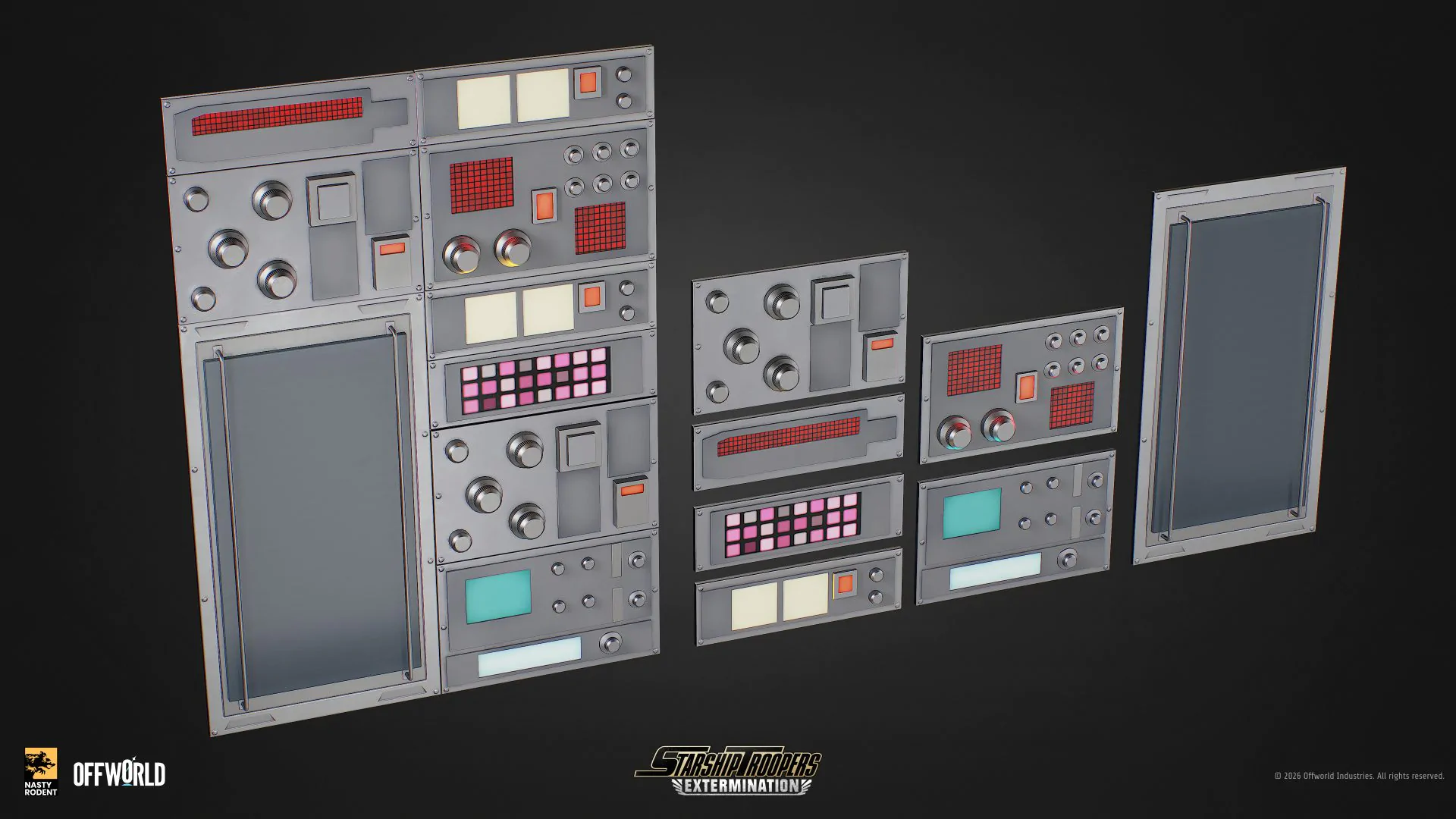
With Offworld Industries, we created props, environment and aviation assets and helped develop game locations for this Unreal Engine 5 co-op shooter.
View the Starship Troopers: Extermination case
Miasma Chronicles
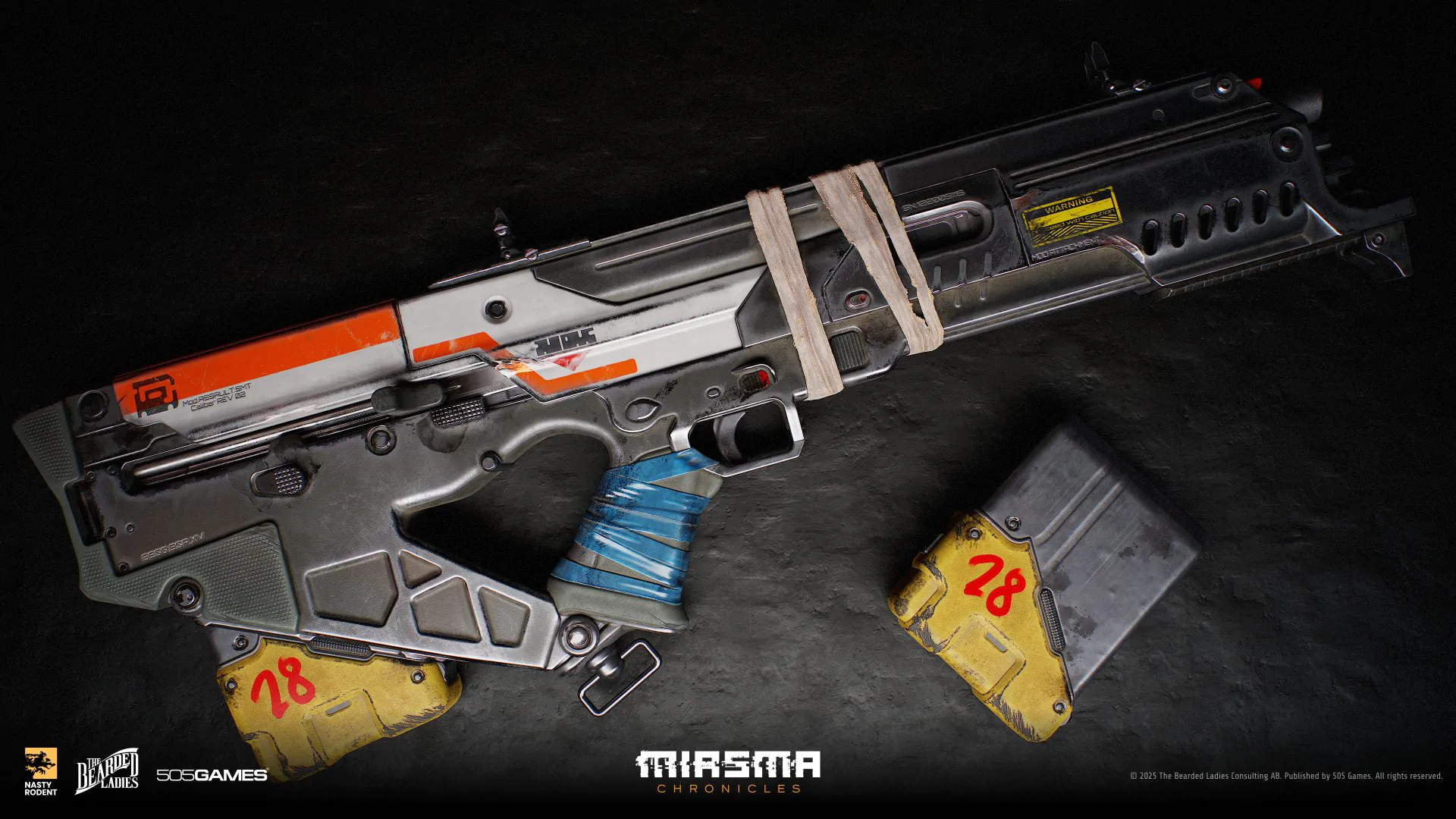
With The Bearded Ladies, under publisher 505 Games, we created weapons, props and environment assets for a tactical adventure built on Unreal Engine.
View the Miasma Chronicles case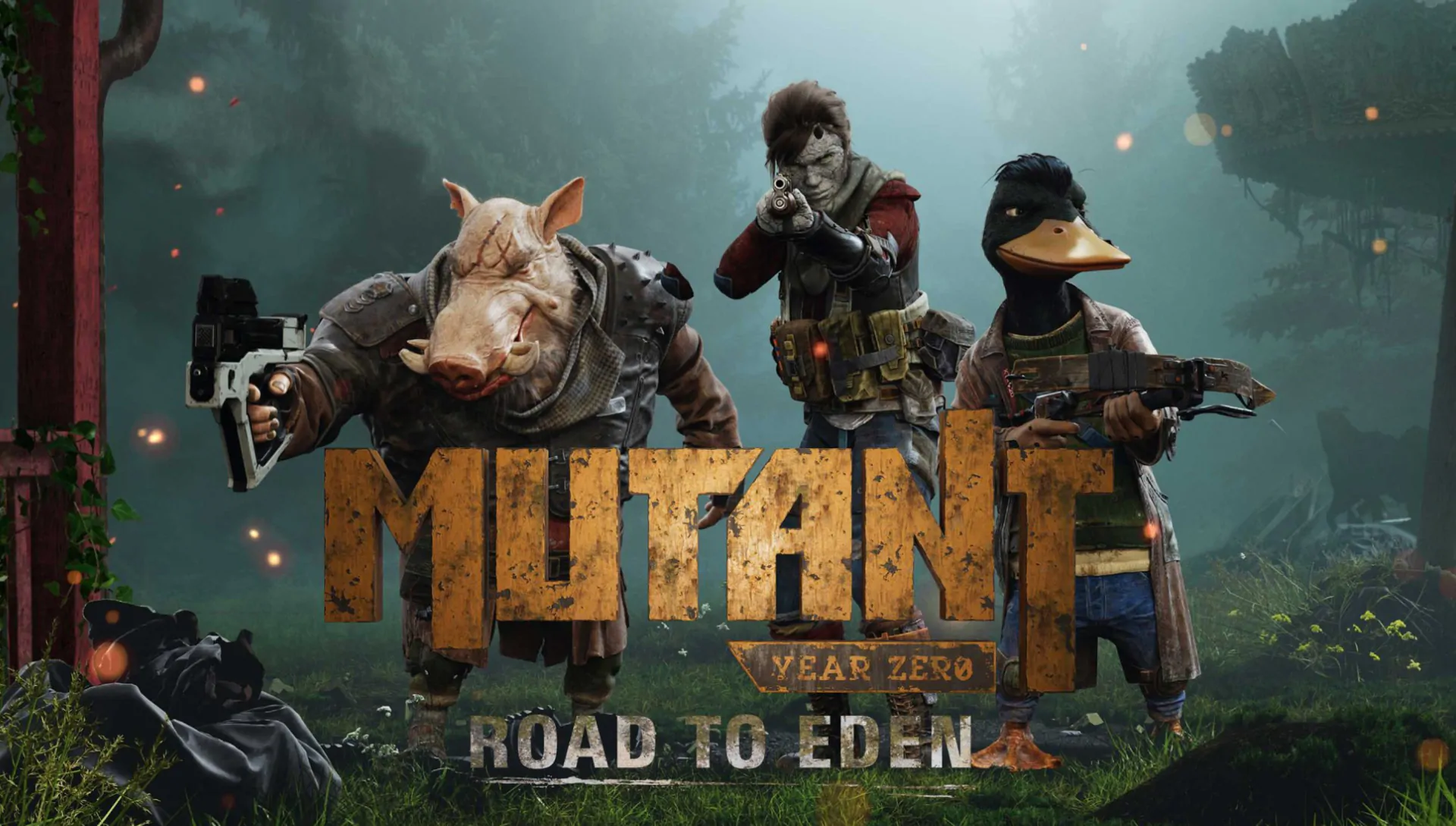
Mutant Year Zero: Road to Eden
With The Bearded Ladies, we created weapons, props and environment assets for a tactical game built on Unreal Engine 4.
View the Mutant Year Zero case07 · The Evidence
What is confirmed
and what we agree
with you
| Topic | Confirmed on our cases | Agreed with you at the brief |
|---|---|---|
| Games built on Unreal Engine | Starship Troopers: Extermination (UE5), Miasma Chronicles, Mutant Year Zero (UE4) | Your engine version |
| Props and environments | All three games | Kit size, scale, style |
| Weapons and vehicles | Miasma Chronicles, Mutant Year Zero (weapons); Starship Troopers: Extermination (aircraft) | Detail by asset class |
| Nanite, Lumen, World Partition setup | Not documented on these cases | Which systems your project uses |
| Level building, lighting, optimization | Not part of our work on these cases | Your team, or scoped separately |
FAQ's: Unreal Engine 5 Game Art
What makes art for Unreal Engine 5 different?

Does Nanite mean we no longer need LODs?
How does Lumen affect materials and textures?
Which naming convention do you use?
Have you worked on Unreal Engine 5 games?
How do I get an estimate?
Building in
Unreal Engine 5?
Tell us about your project, your target platforms and the engine features you use. We typically come back with questions and a draft scope within 1–2 business days.
- Transparent pricing
- Honest feedback
- No hidden costs - ever